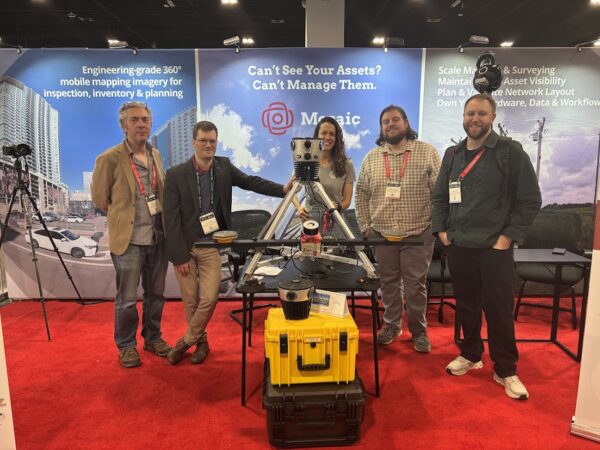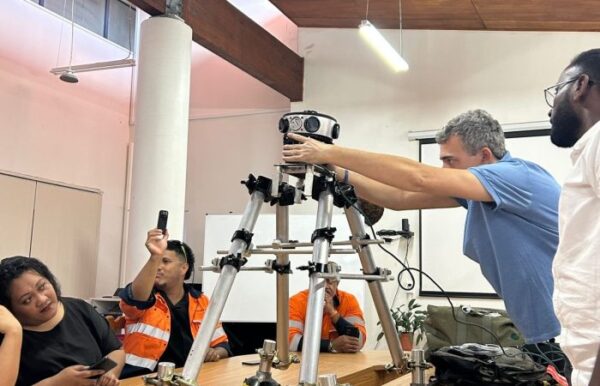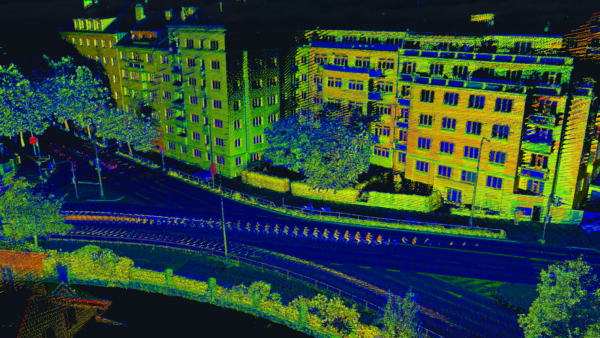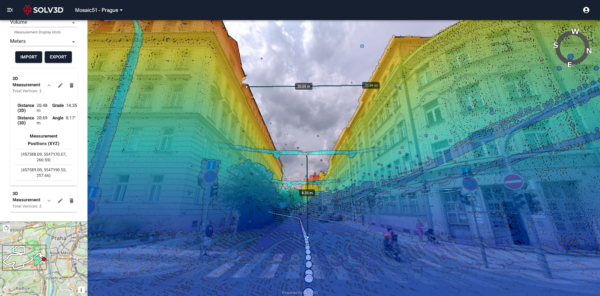
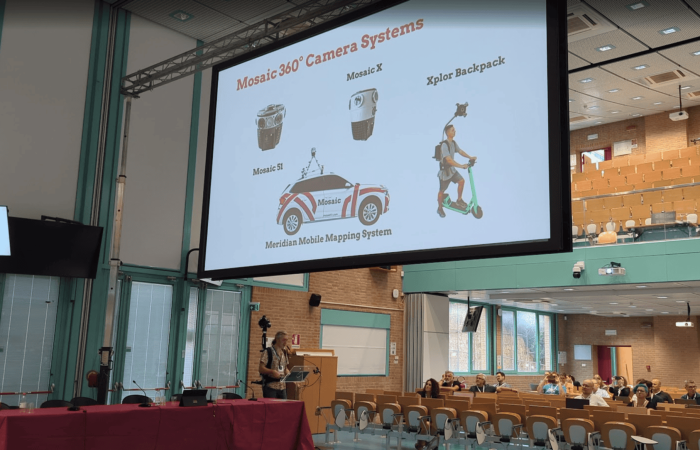
Did you catch us at Digital Heritage 2025 in Siena, Italy? If not, here are the highlights!
Autumn means school is back in session and industry conferences are in full swing. The Mosaic team has been incredibly busy running to their usual circuit of public works, construction, and engineering conferences.
But a few weeks back, Mosaic shook it up by attending Digital Heritage 2025. This event focused mainly on “documenting, conserving, and sharing heritage” for important cultural artifacts, like buildings, landscapes, and even intangibles like traditions and language.
This was the first time Mosaic presented at a conference dedicated entirely to digital cultural heritage. For Lynn Puzzo, Mosaic’s Director of Sales and Marketing, it showed a lot of potential.
“This was the first time that Mosaic exhibited at a more humanities-based event. It was eye-opening to see the potential for 360° capture outside of the traditional mapping and geospatial industries. I got to see people I’ve met at previous events, as well as some new faces. Meeting passionate individuals who are using cutting-edge technology to preserve our cultures was especially exciting.” – Lynn Puzzo
The future of historical preservation
Although historical preservation societies are not usually on the cutting edge in conversations about 3D scanning and LiDAR, they are a growing demographic. This is especially true when one looks at the importance of tourism for the economy and the EU’s willingness to fund social and cultural projects. Jeffrey Martin, CEO and Co-founder of Mosaic, had this to say about his time at Digital Heritage 2025,
“While Mosaic mostly focuses on the geospatial industries, we are keenly aware of the power of state-of-the-art 3D scanning for the documentation and analysis of historical sites. To be more blunt, despite making most of our money from customers scanning utility poles and cracks in the road, we love scanning old stuff!” – Jeffrey Martin
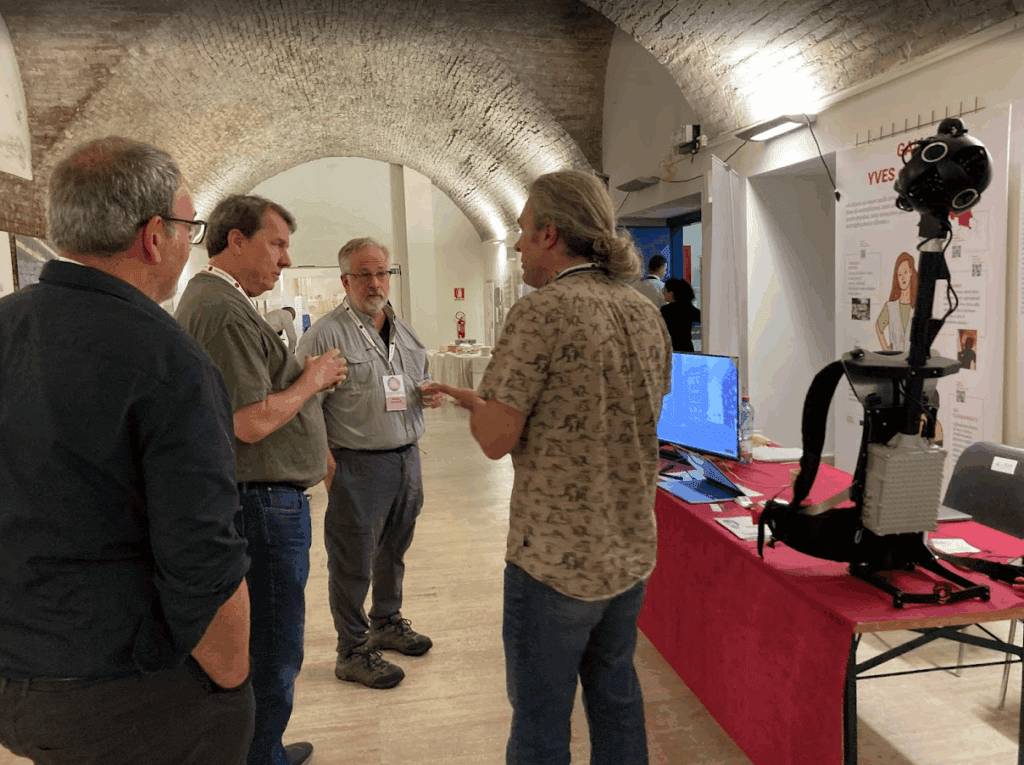
Digital Twins for Digital Heritage
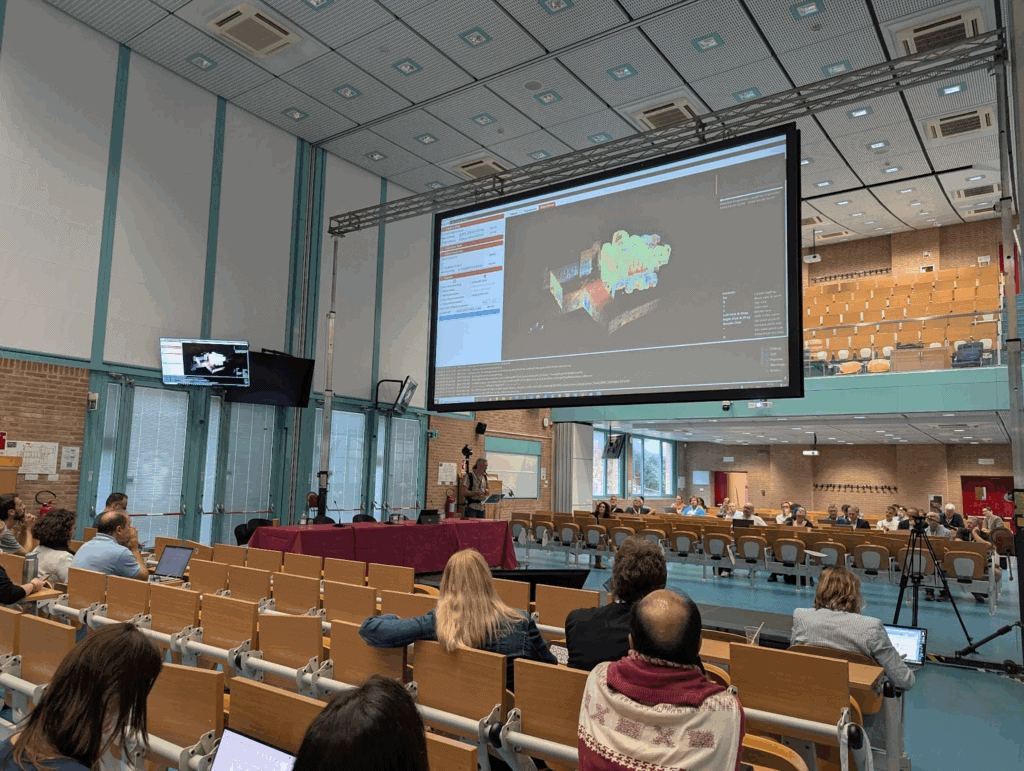
Jeffrey also presented Digital Twins for Digital Heritage: From Imagery to Emerging Formats. In this presentation, he showcased digital preservation projects captured with our Xplor backpack camera with LiDAR.
He showed the wide variety of use cases for the Xplor in the field of digital cultural preservation. One such example, seen in the photo below, is a point cloud of the Cathedral of Santa Maria in Caceres, Spain. One walkthrough with the Xplor backpack equipped with LiDAR produced the data needed to create this digital replica of the 600-year-old cathedral.
When we asked Jeffrey about his overall impressions of the conference, he said,
“While the digital heritage space may not be as huge or well-funded as, say, the oil industry, it is absolutely in need of solutions such as ours – systems for 360° imaging, photogrammetry, and 3D Gaussian Splats. We had compelling conversations with everyone from students to large organizations already well established in digital cultural heritage.” -Jeffrey Martin
The only downside to Digital Heritage 2025 is that it is not a yearly event! The next one should be in 2028, and we look forward to attending and bringing even more exciting technologies to the conversation. See you there!