Let’s unpack which of Mosaic’s MLS systems are the best fit for your projects
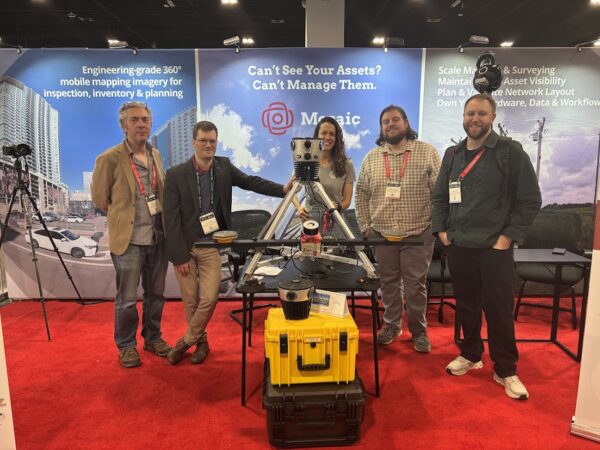
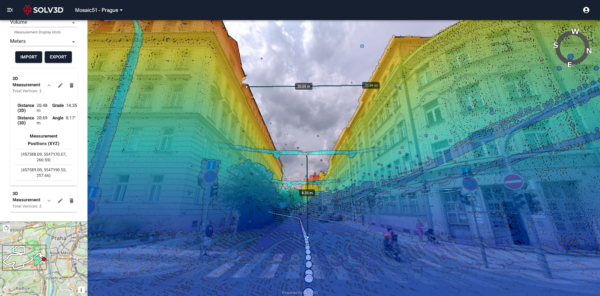
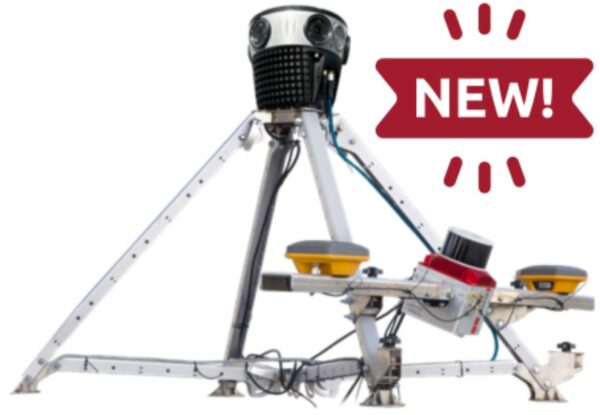
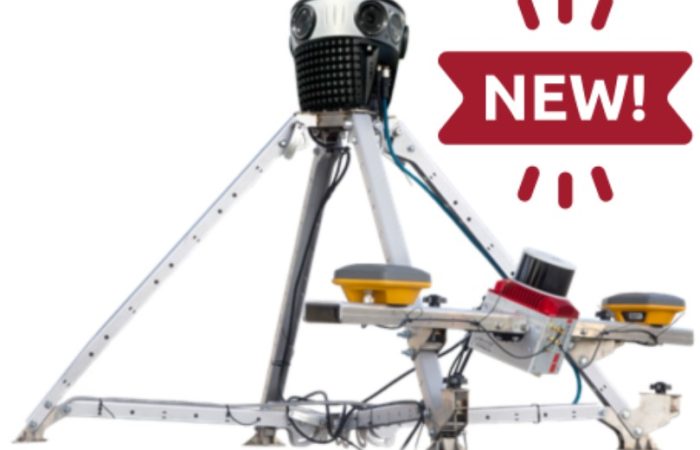
Both Meridian and Meridian Lite are designed around the same core idea: an integrated, calibrated MLS system that pairs Mosaic 360° imagery with an integrated LiDAR/IMU. With this combination, you can deliver panoramas and point clouds from a single vehicle deployment.
For expert buyers, the decision usually comes down to one question:
Do you need the Meridian’s “max-quality” imaging package (Mosaic X, global shutter, higher panoramic resolution), or the Meridian Lite’s “right-sized” package (Mosaic 51, rolling shutter, lower data weight and faster post-processing handling for typical city-scale programs)?
What stays the same: the LiDAR+INS class, the simplicity, and the flexibility
Both Meridian and Meridian Lite share the same core LiDAR+INS functionalities professionals need from an MLS system. They are all-in-one mobile mapping systems built for surveying, mapping, GIS, asset management, and smart-city projects. At their core, they use the same Phoenix Scout-M2X LiDAR unit and are easy to install.
The Phoenix Scout-M2X LiDAR unit
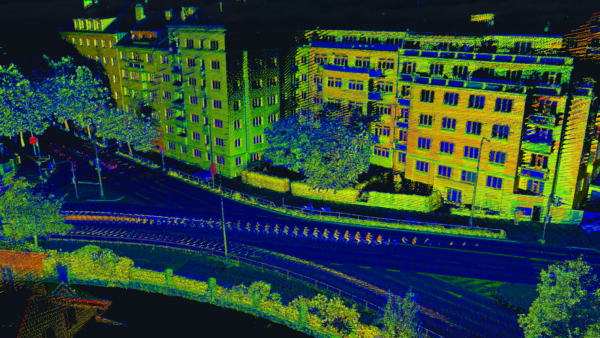
The Phoenix Scout-M2X LiDAR system delivers the level of detail our customers demand for their mobile mapping applications, without the bloat. While other major LiDAR systems offer 1-2 million points per second, then decimate the data in post-processing, the Phoenix Scout-M2X captures an amount that is both manageable and detailed. Capture and process only what you need to save money and time.
In either Mosaic MLS system, you’ll be working with a:
- LiDAR range: 120 meters
- INS accuracy: 2-3 cm
- INS precision: 2-4 cm
- Dual antenna, internal IMU, and GNSS receiver
- Position Accuracy: 1 cm + 1 ppm (RTK) and 0.5 cm (PPK)
- Sensor Precision: 10 mm
- Operable in temperatures from 0 to +40° C (32 to +104° F )
“At Phoenix LiDAR, we build some of the most advanced mapping systems in the industry but sometimes we don’t give them the spotlight they deserve. One system I believe deserves more attention is the Scout-M2X paired with our Mosaic M51 360° Camera Mast on our Universal Roof Rack System. This combination is ideal for organizations looking to capture both 360° imagery and LiDAR spatial data but on a limited budget.”
-Grayson Omans, CEO of Phoenix LiDAR
Right-sized capture
MLS teams rarely lose time because they can’t collect enough data. They lose time because they collect too much data for their downstream pipelines to absorb efficiently. Think storage rotation, transfer, anonymization, indexing, cloud upload, and multi-software processing stacks.
“We are excited to be able to host Mosaic data in our platforms. The Meridian mobile mapping system data speaks for itself, with excellent point cloud and imagery quality that makes extraction easier than ever, and their team has deep industry knowledge and clear enthusiasm for mapping technology. We look forward to innovating together!”
-Margaret Dudzinski, CMO at New Compass Solutions
By pairing Mosaic cameras with the Phoenix Scout-M2X, Meridian and Meridian Lite bring you 800,000 pts/sec with 3 returns. This is sufficient for many automation and interpretation needs while reducing data overhead.
That’s the operational heart of Meridian and Meridian Lite: you’ll have enough point cloud density for most roadway and streetscape asset programs, with a deliberate push toward dataset sizes you can process quickly and repeatedly.
Ease of use in the field
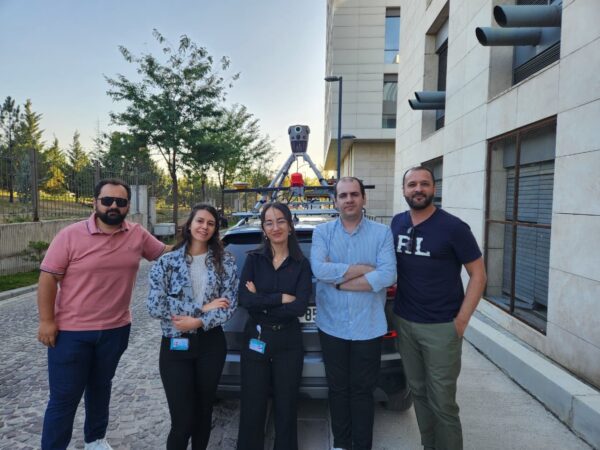
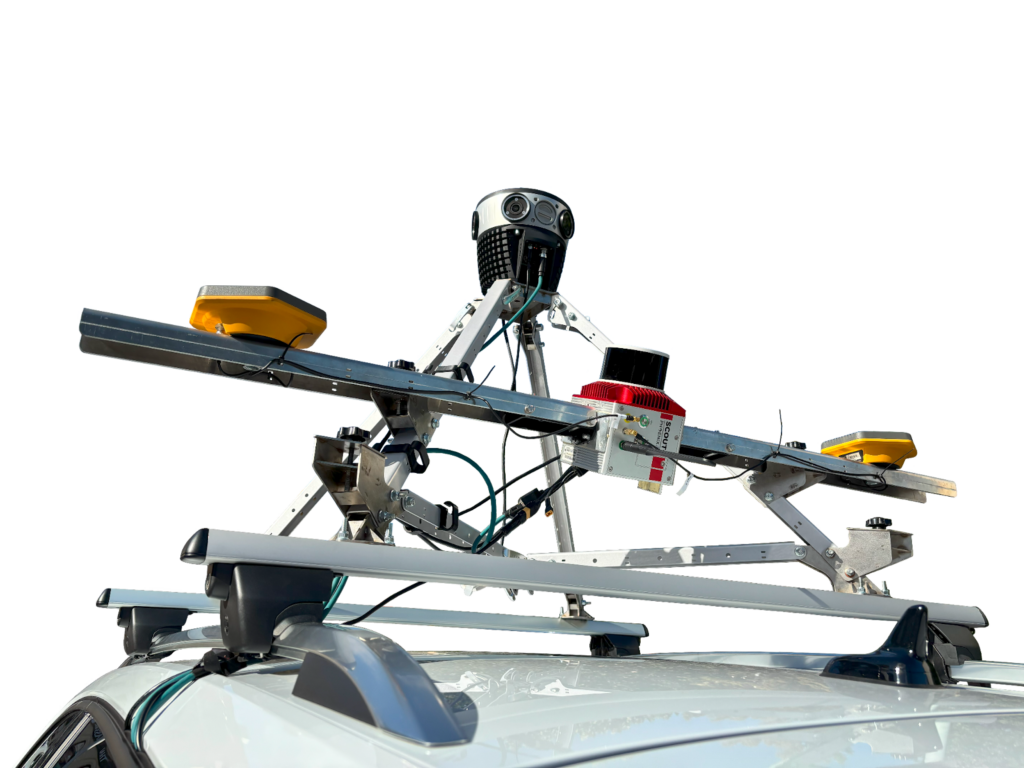
For the installation of either Mosaic MLS system onto a vehicle, you’ll use a lightweight, compact roof mount. A single operator can set it up, collect the data, and monitor everything from the cab. The user-friendly design of the roof mount and monitoring software means even a novice can quickly get on the road and capture data. This reduces training time and streamlines the workflow, enabling easy project upscaling.
Flexible workflows
An MLS system is an investment piece in any surveying portfolio. This is why Mosaic designed the Meridian and Meridian Lite for maximum flexibility. For projects that only require high-resolution 360° imagery, simply disengage the LiDAR unit and start collecting the stand-alone imagery data.
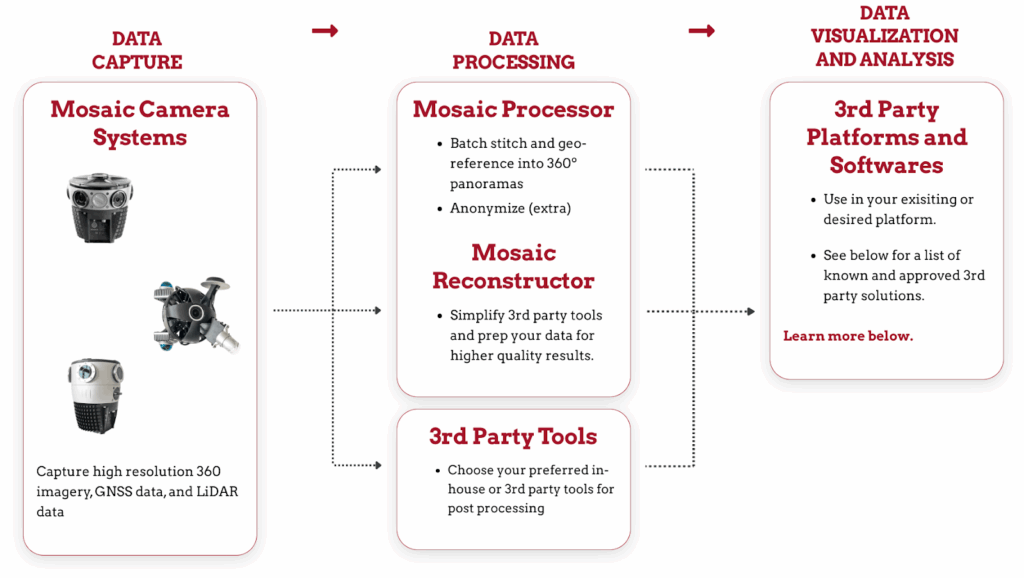
Mosaic’s non-vendor-locked imagery means there are no hidden subscription services or proprietary data limitations when processing imagery data. Whether you want to use our tools (Mosaic Processor and Anonymizer) or a third-party tool, it is your image data and your choice!
The main differentiator: imagery
It mostly comes down to imagery and the subsequent processing time when choosing between the Meridian and Meridian Lite. You should treat the choice less like “two totally different MLS platforms,” and more like two configurations optimized around the camera subsystem and the intended data volume and turnaround profile.
Meridian with Mosaic X
Meridian is positioned as the higher-resolution imaging option, with the Mosaic X 360° mobile mapping camera. In practice, this typically means that if your work is sensitive to motion-induced distortion and you want the strongest imaging foundation for measurements, inspections, and repeatable photogrammetry-style use of panoramas, Meridian is the go-to configuration.
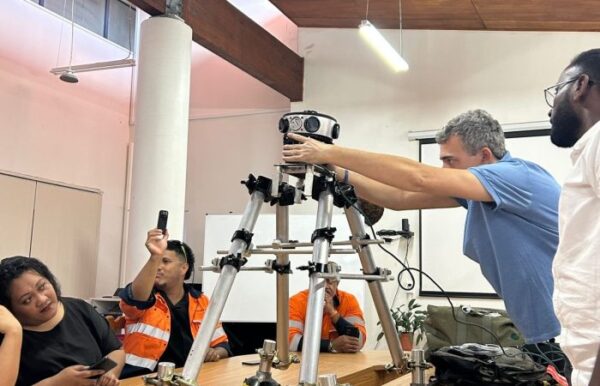
The Mosaic X 360° camera has the following features:
- 6 × 12.32 MP sensor camera
- Equirectangular Pano: 13.5K
- Global shutter sensors
- Pixel dimensions: 2.74 μm (H) × 2.74 μm (V)
- A large internal storage (1-2 TB USB) and GNSS
- IP-67 tested for capturing under rough conditions
Meridian Lite with Mosaic 51
Meridian Lite is tuned for the work most MLS systems handle every week, where the limiting factor is not capture but post-processing time and data volume. It is designed for urban or day-to-day mapping, where the priority is often high-resolution street-level imagery accompanied by precise point clouds.
With the Mosaic 51 360° mobile mapping camera, Meridian Lite has all the features you need for high-quality data capture, without the bulk.
Mosaic 51 at a glance:
- 6 x 12.35 MP sensor camera
- Equirectangular Pano: 12.3K
- Rolling shutter sensors
- Pixel dimensions: 1.55 μm (H) × 1.55 μm (V)
- Rugged design for the harshest conditions: IP-67 tested
- Built-in computer for simplicity in the cabin
- Large internal storage (1-2TB USB) for non-stop data capture
When Meridian is the better choice
Choose Meridian when:
- You want the highest pano resolution option with a global-shutter imaging package.
- Your deliverables depend heavily on imagery quality. This includes imagery-first inspection, advanced texture evaluation, demanding visualization, or any workflow where you want the strongest imaging baseline, and you can handle the data weight.
- You want to colorize point clouds.
When Meridian Lite is the better choice
Choose Meridian Lite when:
- You’re primarily doing urban, smart-city, and/or asset inventory capture at scale. The real constraints are throughput and turnaround time.
- You want a system explicitly positioned to avoid data overkill, with clear emphasis on faster processing and storage sanity.
- You’re comfortable with the trade: 12.3K rolling-shutter Mosaic 51 instead of the 13.5K global-shutter Mosaic X.
“Contrary to popular belief, many customers don’t require RGB projection into their LiDAR point clouds. In these cases, the added expense of a global shutter 360° camera isn’t necessary.”
-Grayson Omans, CEO of Phoenix LiDAR
How to choose the Mosaic MLS system for you
For the most straightforward decision-making process, ask yourself these questions:
- Are our current projects imagery-limited or processing-limited?
- If processing, storage, and turnaround times are your main bottlenecks, go with the Meridian Lite.
- If imagery fidelity is your main concern, choose the Meridian.
- Do we require global shutter image capture for our standard operating conditions?
- If yes, choose the Meridian with its global shutter lenses.
- If not, the Meridian Lite is likely sufficient with its rolling shutter lenses.
- What are we optimizing for: ultimate imagery detail or predictable turnaround?
- The Meridian pushes the imagery ceiling with the Mosaic X’s global shutter lenses and 13.5K resolution. On the other hand, the Meridian Lite is valued for its repeatable throughput.
Still stumped? Talk to a member of our team today to get an expert walk-through of the features of each of Mosaic’s MLS systems.