What does Mosaic do?
Mosaic builds high-resolution 360º cameras designed for mobile mapping, reality capture, and geospatial data collection. Our cameras provide unmatched image clarity, making them ideal for surveying, infrastructure inspection, and urban planning.
Can I see examples of data captured with Mosaic cameras?
Yes! Check out real-world examples and customer use cases on our YouTube channel, where we showcase our cameras in action for mapping, surveying, and infrastructure projects. If you’re looking for sample data, please contact us by filling out the contact form below, and we’d be happy to share sample data sets.
Do I own the data I collect with a Mosaic mobile mapping camera system?
Yes! You own your data today, tomorrow, and forever. We are a great alternative to vendor-locked mobile mapping systems.
Can I become a reseller or partner with Mosaic?
We are always looking for strategic partners. If you’re interested in distributing Mosaic cameras or integrating our technology into your solutions, reach out!
Do you offer demos or trials?
Yes! We offer virtual and in-person demos to show how our cameras fit into your workflow. Contact us to schedule a demo tailored to your industry.
Do Mosaic cameras work with LiDAR?
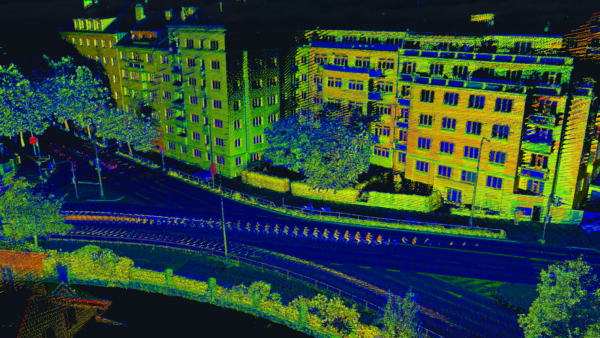
Yes! Our cameras complement LiDAR systems by providing high-resolution imagery for colorizing point clouds, feature extraction, and visual verification. They integrate seamlessly with major mapping and GIS platforms.
Do I need special training to use a Mosaic camera?
No. Our cameras are designed for ease of use with a simple setup process. We provide detailed documentation, training videos, and customer support to help you get started quickly.
How durable are Mosaic cameras?
Mosaic cameras are built for rugged field use, with weather-resistant enclosures and robust hardware designed to withstand vibrations, extreme temperatures, and tough conditions in the field.
Where can I buy a Mosaic camera?
You can request a quote or speak with our sales team by contacting us directly.
What are the key differences between the Mosaic 51, Mosaic X, and Mosaic Xplor?
Resolution and shutter sensors are the key differences between our cameras.
- The Mosaic 51 camera has rolling shutter sensors, while the Mosaic X and Mosaic Xplor both have global shutter sensors.
- The Mosaic 51 camera data produces 75.5MP panoramas, while the Mosaic X and Mosaic Xplor camera data produce 91.2MP panoramas.
- The Mosaic 51 and Mosaic X camera systems are designed for mounting on a vehicle, operating at normal road speeds. The Mosaic Xplor was built to be used on a human, whether walking, riding a scooter, or riding a bicycle.
- Each camera’s product page will tell you more details.
How do the camera systems capture images?
With each of our models, you can capture images by time (frames-per-second), based on the traveled distance (distance-based triggering), or with an external electrical pulse.
What types of data files are generated by the camera systems?
The output data from the Mosaic camera systems is delivered in unencrypted, non-vendor-locked formats. After your data capture, you’ll find h.264-compressed images in an MP4 container, corresponding GPX files with trajectories, and timestamps in a CSV file format.
Do I need a workstation/computer in the car?
Nope! The camera control software runs on the camera itself, and you can access it via an Ethernet cable connected to a laptop, tablet, or smartphone.
How are the camera systems powered?
The Mosaic 51 and Mosaic X are powered by external V-mount batteries. They are widely used in photography and videography and are readily available from many online retailers.
How do you process the camera data, and what software is available?
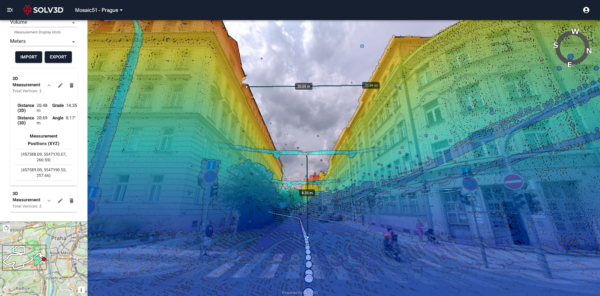
All Mosaic camera data is non-vendor-locked, so you have the freedom to choose the software solution that best fits your needs and workflow. However, if you are in the market for post-processing tools, check out our lineup of software!
What external sensors can be integrated with the camera systems?
The Mosaic 51 and Mosaic X camera systems come equipped with a built-in AUX port connection and are shipped with an AUX port cable. This enables integration with most industry-standard external sensors, such as GNSS, IMU, and LiDAR.
Where are your cameras produced?
Our cameras are designed and produced in the European Union, specifically the Czech Republic. We are proud to have our headquarters located in the beautiful capital city of Prague.
Does the equipment come with a warranty?
Yes! Every camera system comes with a 1-year warranty.
Do you offer any customer support?
Yes! We want you to know that what you purchase will get the job done, so we offer technical support both before and after purchasing our mobile mapping systems.
How can I stay in touch with Mosaic?
Get the latest news in geospatial mobile mapping by signing up for our newsletter and following us Youtube on LinkedIn. We publish industry content and keep you up to date on our breaking developments.