Integrated Vegetation Management Solutions for Utilities
What is the current state of utility vegetation management?
Surprise, surprise. Like most larger infrastructure-based industries in the US and worldwide, utility vegetation management is lagging behind current technological advancements. Many transmission and distribution utilities (T&D utilities) rely on archaic methods of managing the spread of vegetation. These risks pose dangerous situations concerning the reliability of the grid, human lives, and environmental ruin.
However, there is technology that exists to improve the efficiency and effectiveness of vegetation management. It aims to reduce blackouts, wildfires, human loss, and property damage.
What is Utility Vegetation Management?
Vegetation management is the inspection, review, and maintenance of vegetation around utility infrastructure, like, transformers, power lines, and utility poles. The purpose is to prevent future outages by staving off bushes, grass, and trees from causing damage to utility infrastructure.
Utility lines and nature are, unfortunately, not the best of friends. The proximity of one to another can lead to a dangerous situation for the surrounding land and communities. Sparks from power lines can cause dry brush to ignite, especially in drier regions. The heat generated from electrified power lines is sometimes enough to set afire branches that touch the lines. Structurally unsound trees can easily come down at a moment’s notice, causing a power outage. Even healthy trees can succumb to heavy winds and rains, causing blackouts.
Why should utilities manage vegetation?
Vegetation management is often a significant expense for many utilities, and one of the largest preventive maintenance expenses.
“Billions of dollars are spent each year maintaining network assets and ensuring they are cleared of encroaching vegetation,” said Mike Kelly, Senior Research Analyst, Guidehouse Insights.
Recent estimates from the U.S. Energy Information Administration stated that in the United States alone, there are nearly 160,000 miles of high-voltage power lines, and millions of low-voltage power lines and distribution transformers.
Utility vegetation management done properly can be the most powerful factor for maintaining system reliability. But, when done poorly or not at all, it can be the most powerful factor leading to power outages.
On top of that, utility companies should and must manage vegetation for a variety of reasons.
Reason one: First and foremost – safety – for workers, for local citizens, and for the local environment.
Poorly tended vegetation around utility infrastructure can lead to problems down the road for workers, who will have to deal with more difficult situations if they only attend to the vegetation at the last moment or past the last moment. Vegetation management can prevent wildfires which lead to destruction of land, property, and lives. Hazardous trees left to knock over utility poles can cause blackouts which have led to numerous deaths and injuries.
Reason two: keeping things moving
…and flowing (mostly electricity) through those power lines is of course the purpose of their existence. By ensuring a reliable system, customers and stockholders are all much more likely to be happy and satisfied.
Reason three: regulations
NERC, the North American Electric Reliability Corporation (NERC), is a not-for-profit international regulatory authority. Its mission is to assure the effective and efficient reduction of risks to the reliability and security of the grid. Previous to the 2003 Northeast Blackout, NERC set voluntary standards. However, following what was then the largest blackout in U.S. history, in which 50 million people lost power for 2 days, Congress passed the Energy Policy Act of 2005. It requires that the Federal Energy Regulatory Commission (FERC) approve and enforce all standards set by NERC.
Reason four: money
The 2003 blackout was estimated to cost $6 billion, while other disasters, such as wildfires, have led to costs incurred by utilities of $7 billion. And another utility company was held liable for damages to property of nearly $15 billion. Utilities have also seen their stock prices drop in the weeks following disasters such as blackouts and wildfires.
Types of Vegetation Management
There are a whole host of methods of vegetation management. Some of the most common include brush removal, pruning, trimming, cutting down, removing, mowing, herbicide, and allelopathy.
Pruning or tree trimming is done on trees that are considered structurally sound. It involves strategically trimming the tree so that it maintains its integrity while steering clear of utility lines. This is called ‘directional pruning.’ You can think of it like bonsai for large trees growing near utility poles.

The removal of hazardous trees that are rotting or structurally unsound comes later if trimming or pruning are not possible.
Herbicides and allelopathy are generally used for grasses and bushes that interfere with maintenance crews’ access to utilities.
Traditional methods of vegetation management
The most common method of vegetation management has been, like most surveying tasks, done manually. This involves dispatching a team of surveyors. They manually set up surveying equipment, record data, take notes, and process the data. They make decisions such as when and where to clear brush, trim trees, or remove them altogether.
Problems with traditional methods
There are many problems with these legacy methods of vegetation management, as you might imagine.
Vegetation management with manual labor can be problematic on many fronts. First of all, it is time and labor-intensive. As stated earlier, utilities are working with millions of miles of power lines throughout the country. Having up-to-date knowledge of the conditions of those lines requires many boots on the ground. In fact, it’s outright impossible to have up-to-date knowledge of each mile of power lines.
Not only that, but manually collecting and analyzing data can be risky, as it relies on subjective input from those conducting the inspections and reviews.
Another problem facing vegetation management providers is relying on fixed annual cycles to determine when and how to trim trees. The fixed annual cycle is observed with the human eye, such as leaf unfolding, flowering, and leaf fall.
The problem with continuing to use this method in the decision-making process is that the cycle has been thrown for a loop due to climate change. It is no longer possible to accurately predict future growth of vegetation with the fixed annual cycle.
Poor visibility also plays a large role in ineffective vegetation management. Power lines and distribution transformers are often in remote locations and set back from the road, requiring crew members to spend a considerable amount of time gaining access to the point of interest.
Utility vegetation management’s growth with the help of state-of-the-art technology
How can modern solutions improve vegetation management
While it is not the norm or even very common as of yet, there are modern solutions that can and are helping improve vegetation management for utilities. These solutions often require a combination of both hardware and software for data collection and analysis. Rather than relying on human employees to collect data at a rate unable to keep up with demand, companies are turning to automated, technologically advanced hardware devices (powered with incredibly advanced software systems) for collecting data at a much quicker and more reliable rate.
What technology is advancing vegetation management?
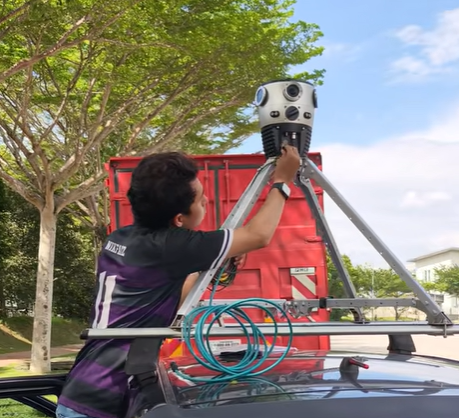
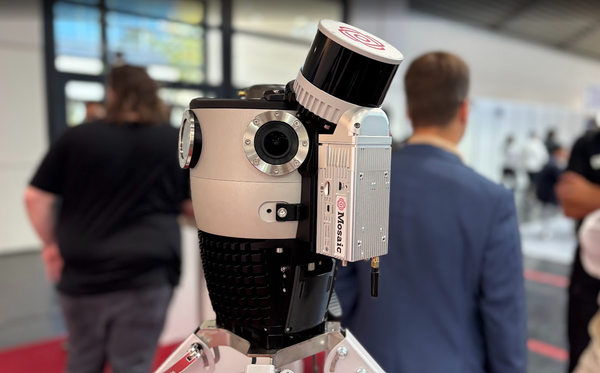
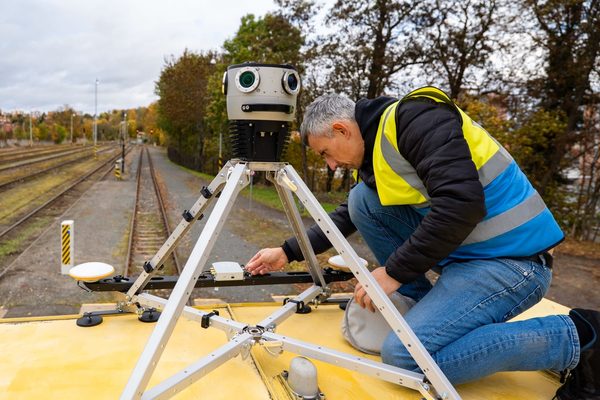
The availability of devices such as 360-degree cameras, sensors, and surveying equipment, which can collect data without the need for excessive human labor, is one of the largest advances in this field. Technologies such as rooftop units or drones, armed with camera lenses, sensors, and built-in computers, are revolutionizing how data is collected.
By utilizing unmanned or single-manned vehicles to collect data, utilities cut down on the large human resources needed to collect data.
In addition, this system of data collection can be done more frequently and with less chance for error, thereby keeping the data fresh and accurate. It also aids utilities in staying compliant with updates on reliability standards from NERC with real-time knowledge of the state of their infrastructure.
Remote sensor technology
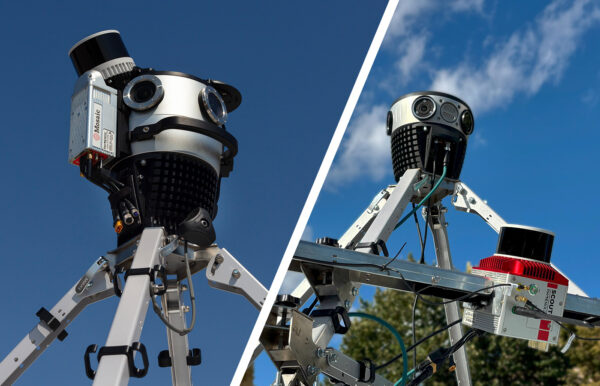
Remote sensing technology is at the forefront of technological advances in utility vegetation management. A combination of LiDAR, GPS, and other such GNSS allows for a visual and spatial representation of the scene in question.
Utilities are able to detect and see the current state of the vegetation growth with pinpoint accuracy and make decisions to prevent overgrowth.
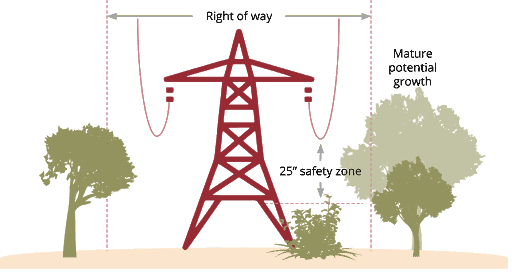
For example (as seen above), if a T&D utility wants to ensure a 25-foot gap between the highest point vegetation will potentially grow and the lowest point the power line will sage under extreme conditions, they need to have precise data regarding the measurements of the trees, bushes and power lines to measure whether the vegetation is dangerous close or not.
HD imagery is also another piece in the puzzle. Because the fixed annual cycles are no longer reliable, extremely high-quality definition images are instrumental in understanding where a bush or tree is in its stage of maturity. Cameras with HD capability, paired with locational information, can give utilities the missing data to more accurately see and predict when trees will start opening their leaves or buds and when they will begin to grow into dangerous territories.
The ability for both 2D and 3D image capture has also proved useful. Utilities have found that by creating a digital twin (a 3D representation of a physical object or space), they are able to detect vegetation encroachment risks, provide predictive pruning strategies, and optimize resource allocation.
Panoramic cameras for vegetation management
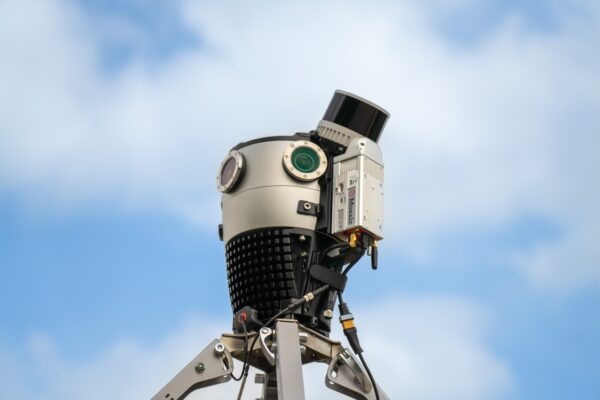
Mosaic offers a data collection solution that enables utilities to gather the necessary information and embolden them to make accurate, cost-efficient, and safe decisions when strategizing their vegetation management.
Some global leaders already have the software, which perfectly complements Mosaic’s hardware, such as GE’s Visual Intelligence Platform
Are you ready to transform your vegetation management with a 360-degree and 3D-capable data collection camera?