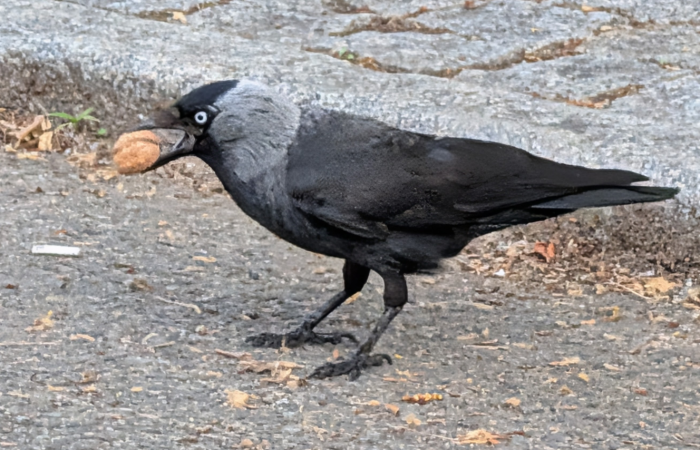
I feed a parliament of rooks outside my house every morning. No language, yet they plan, remember faces, and use tools — the same perceive-predict-act loop neuroscientists say a brain is built for, learned entirely from a body moving through the world.
We’re spending billions trying to rebuild that in silicon. The bird got it for free.
This article was originally published on LinkedIn by our Co-Founder and CEO, Jeffrey Martin. It is part of a series. See Part One: What is a World Model here.
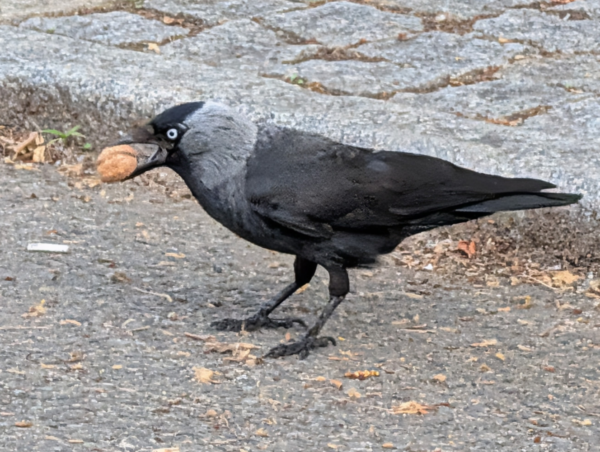
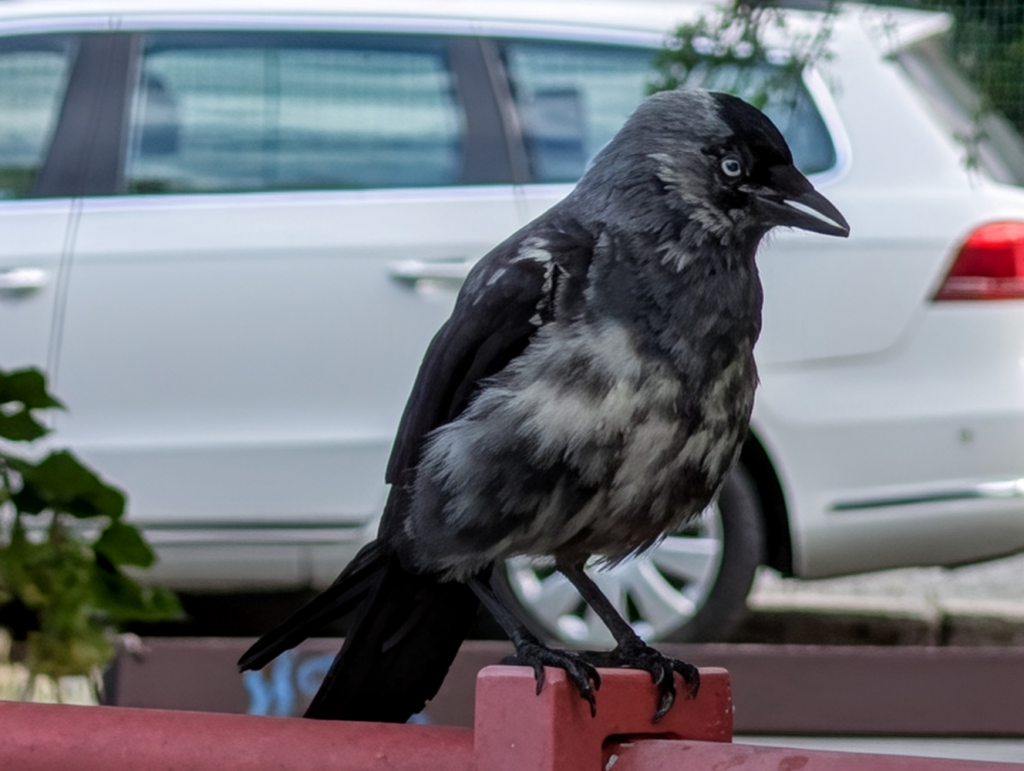
Next to my house there’s a park with three huge old trees. In the trees are around 70 nests with a colony of corvids: rooks and jackdaws. It is a parliament of rooks and a clattering of jackdaws (no murder of crow here).
For those who don’t know, corvids – which include ravens, crows, rooks, magpies, and jackdaws – are some of the most intelligent species of birds. They’ve been observed using tools to open things; they’ve been observed dropping hard nuts onto busy streets for the cars to run them over, breaking them open for easy eating; they have a fantastic memory of people, and have been known to hold grudges against people for generations: crows that were not even alive at the time of some wrongdoing, will continue to hold a grudge against certain individuals. These are really, really smart creatures! (If you want to start feeding your own local corvids, there is of course a subreddit for such enthusiasts – r/crowbro – it’s one of the warmer and kinder subreddits you’ll find!)
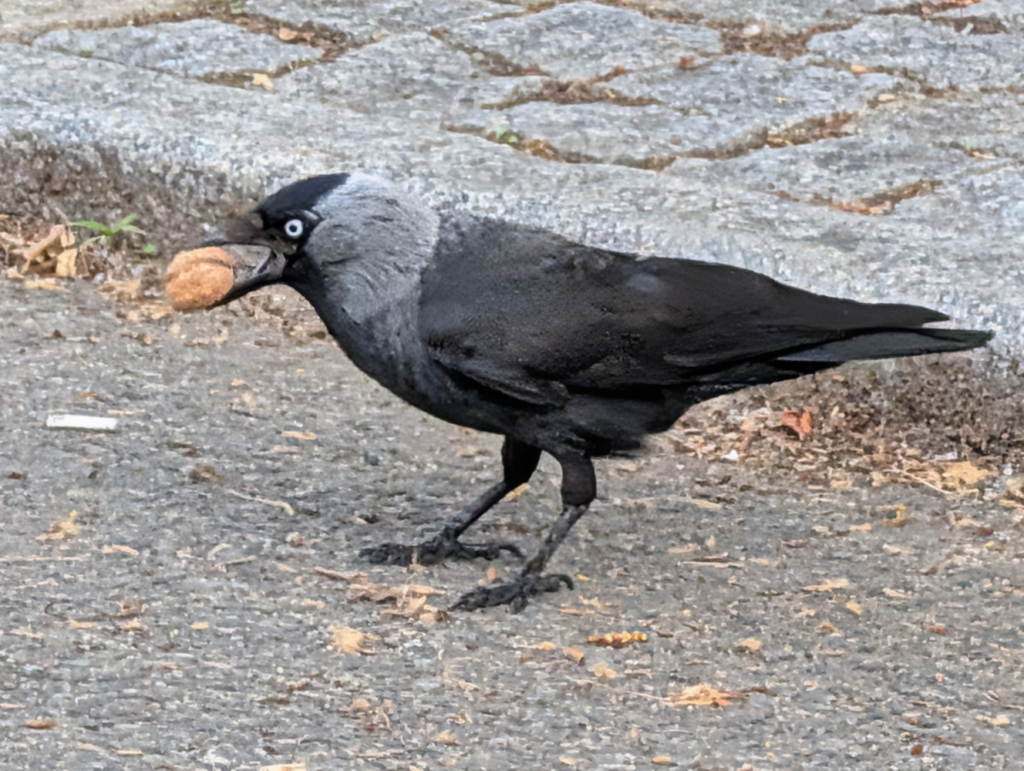
While it’s probably an urban legend that they will bring me gifts or vanquish my enemies, I still think it is worthwhile (and fun) to observe them more closely. Thanks to my local facebook neighborhood group, I managed to produce about 30kg of walnuts from various folks (walnuts are native here – it seems a lot of people have a box of last year’s walnuts in their basement). I now have a new morning routine: while my coffee is brewing, I pop outside with a couple handfuls of walnuts, drop them in the same spot on the street corner just next to the park. Within a few minutes, the birds descend and enjoy their snacks. I use walnuts because pigeons can’t eat them. The rooks and jackdaws love them. Sometimes they’ll grab it and fly away, sometimes they’ll grab it with their feet and peck it open. One week I was away for a night, and upon returning, the rooks seemed to be yelling at me a bit – Hey! Where were you this morning? I brought them a few walnuts right away and they seemed pretty happy.
What is the thread here, and why am I doing this?
I’ve been deep in a few books, including Surfing Uncertainty by Andy Clark, The Predictive Mind by Jakob Hohwy, Active Inference: The Free Energy Principle in Mind, Brain, and Behavior by Parr, Pezzulo, and Friston. These books are all circling around the topic of embodied cognition – how do the minds of sentient beings think, plan, and act.
So, these birds. They don’t use words, but they’re smart. They think, they plan. They have expectations. Already after a couple weeks, they know about me, and they expect me to show up in the morning with some tasty snacks. But they are not narrating this story in their heads with words. What they are doing though is for sure a complex, multi-step chain of logic, based on their perceptions. They perceive, they think, and they act. They make predictions and compare the result to what their prediction was. This is the main thread in the books I’m reading now: long before there were any words in the world, there were creatures with various levels of intelligence, capable of perceiving, thinking, planning, and acting, with various degrees of complexity. Language came much, much later. All of this basic wiring is already in place. While language most certainly supercharges and accelerates our ability to use this mechanism of per ception and cognition, it is not the thing that enables it.
Think about that morning I came back after being away. The birds weren’t confused – they were annoyed. They had a prediction: man, coffee, walnuts, this corner, this time of day. The world failed to deliver. The gap between what they expected and what actually showed up is, in the language of these books, “prediction error” – and shrinking that gap is, more or less, what Friston and Clark think a brain is for. A rook yelling at me from a branch is prediction error with feathers on. It expected walnuts, it got an empty corner, and the surprise had to go somewhere.
The nut-dropping is the same story from the other direction. A rook sometimes can’t crack a walnut in its beak, so it does something stranger and smarter: it changes the world until the world cracks the nut for it. Drop it from height, or let a car do the work. That isn’t just cleverness… it’s the whole loop these books describe. You don’t only update your model to match the world; you also act on the world to make it match your model. The bird wants an open walnut, so it rearranges reality until reality hands one over.
And none of this – not the grudges, not the tool use, not the irritation at a missed breakfast – came from being told. It all came from a body moving through a world: sampling it, predicting it, being wrong, and trying again. Which is the one of the main threads in these posts. There are humans today spending billions trying to build, in silicon, a kind of intelligence that the rook outside my window already has for free. The difference is that the rook developed it the only way anyone ever has: with a body, in a world with other individuals in it, over time.
And yet, we still don’t know how to replicate it, even with a datacenter worth of compute. There is some mechanism that is perhaps not especially complicated in its fundamentals, but somehow still beyond what our best minds have managed to replicate. This is the frontier. Will it help to have calibrated, accurate sensory data as part of the training / learning procedure, in order to build it ourselves? It’s not the only missing part, but I think it will help.
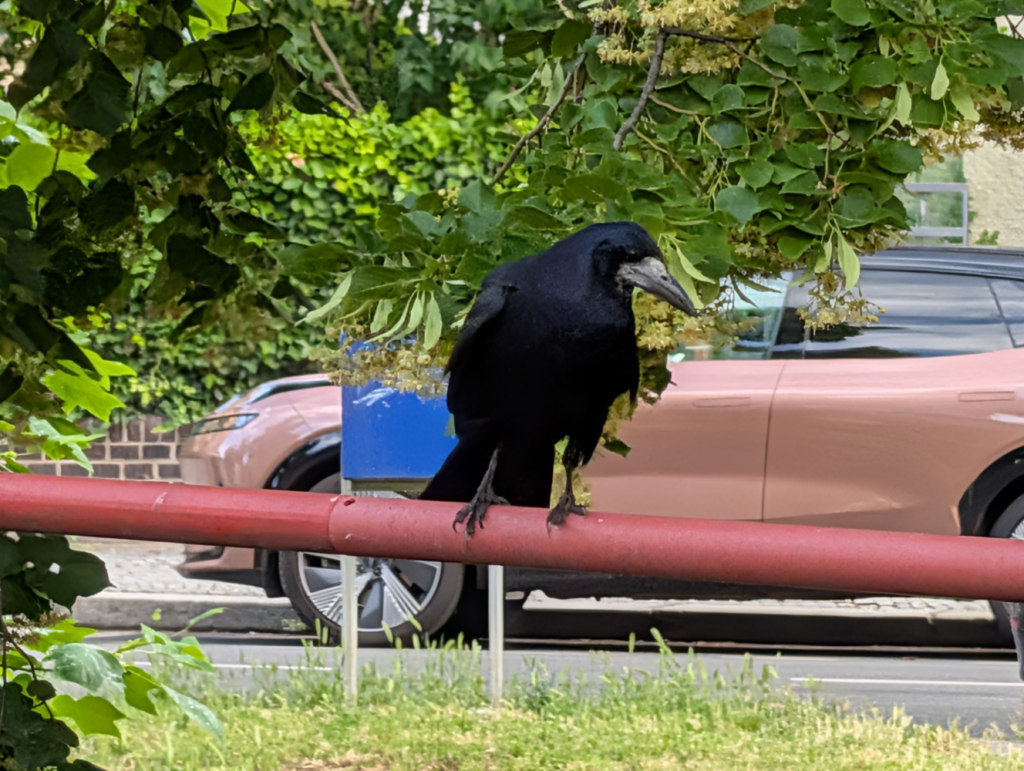
So no, I don’t really expect the rooks to bring me gifts or vanquish my enemies. But every morning, while the coffee brews, I’m quietly running a little experiment in two directions at once. They’re learning to predict me. I’m learning to predict them. And somewhere in that small daily loop on a Prague street corner is, I think, the whole question I’ve been chasing through all these books, happening for real, with walnuts, before I’ve even had my first cup.
I just hope my cat doesn’t get involved…