
Answering your frequently asked questions about the Broadband Equity, Access, and Deployment (BEAD) program in 2026
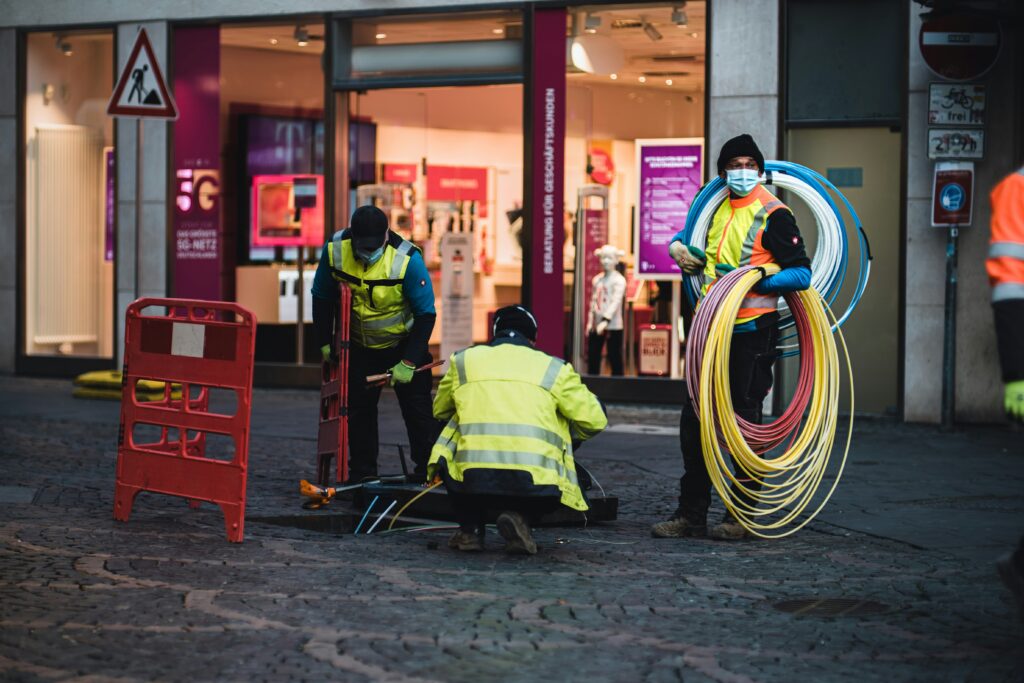
Federally led infrastructure projects are a typical fiscal stimulus during economic downturns. Historically, they’ve included railway, highway, and port development. These projects create jobs, broaden access to services, and reinforce commerce connections. In the modern day, we have to add broadband internet services as another fundamental part of the infrastructure network.
As of 2026, the Broadband Equity, Access, and Deployment (BEAD) program is the largest single federal investment in broadband infrastructure in US history. Construction timelines are currently solidifying across all 56 states and territories.
Network builders, ISPs, and municipalities need a thorough understanding of where the program stands. This includes who qualifies, what the money can buy, and how emerging tools like 360° cameras and LiDAR systems are reshaping how broadband gets built.
What is the BEAD program?
The Broadband Equity, Access, and Deployment (BEAD) program is a $42.45 billion federal grant initiative administered by the National Telecommunications and Information Administration (NTIA) within the US Department of Commerce.
This federal initiative is funded by the Infrastructure Investment and Jobs Act (IIJA) of 2021, also known as the Bipartisan Infrastructure Law. Of the $65 billion that the IIJA allocated for broadband-related initiatives, BEAD received $42.45 billion. This makes it the single largest line item in the broadband investment package.
The BEAD program, which was passed during the Biden administration, is designed to achieve universal broadband connectivity across the United States. Funding the planning, deployment, and adoption of high-speed internet infrastructure in locations that currently lack adequate service is considered a key part of unlocking the country’s economic potential.
COVID-19 exposes weaknesses in the internet infrastructure network
The timing of the IIJA and BEAD program are no coincidence. The COVID-19 pandemic exposed the consequences of internet connectivity gaps:
- Newly remote workers in rural areas lacked adequate bandwidth,
- Students in underserved communities struggled to stay connected as schools switched to online learning, and
- Telehealth services were inaccessible to millions in rural and low-income communities.
Congress and the executive branch identified broadband connectivity as foundational infrastructure on par with roads, electricity, and water. They also drew ties between funding broadband expansion and creating jobs that were lost during COVID-19. The federal government also recognized that market forces alone were unlikely to close the coverage gap. The build cost per location in rural and remote areas is often too high to generate an acceptable return for private capital without subsidies.

For rural Americans, connectivity became a huge challenge.
The BEAD program’s funding system
BEAD operates on a pass-through model. This means the NTIA allocates funds to all 56 eligible entities (the 50 states, the District of Columbia, and five US territories), then each of which runs its own competitive subgrant process. This way, they select the internet service providers (ISPs), utilities, cooperatives, and other eligible deployers to build out last-mile and middle-mile networks unique to their communities’ individual needs.
State-level allocations vary significantly based on the number of unserved rural areas identified in each jurisdiction. Texas, for example, was allocated up to $3.3 billion, while Massachusetts was only approved for $18.8 million. Louisiana, the first state to receive NTIA approval, is deploying approximately $1.3 billion to connect roughly 140,000 homes and businesses.
The BEAD Restructuring Policy Notice of 2025
A major policy shift reshaped the program’s trajectory in June, 2025. The NTIA issued the BEAD Restructuring Policy Notice (RPN), which eliminated the program’s original fiber-preference framework. The NTIA replaced it with a “technology-neutral” approach, allowing satellite, fixed wireless, and unlicensed spectrum technologies to compete alongside fiber for subgrant awards.
NTIA estimates this “Benefit of the Bargain” restructuring will produce approximately $21 billion in cost savings relative to the program’s original projections. The agency has announced a process including public input to determine how those savings will be redeployed.
The state of the BEAD program in 2026
As of early April 2026, all 56 states and territories have submitted their Final Proposals for federal review. Fifty-three have received NTIA approval, formally unlocking grant funds. Construction on the first BEAD-funded projects is expected to begin as early as summer 2026.
Eligibility was determined using the FCC’s National Broadband Map (NBM) as the baseline, refined through each state’s Challenge Process. This is a formal, evidence-based proceeding in which ISPs, local governments, and nonprofits could contest the accuracy of FCC-reported service levels at specific locations.
The program prioritizes locations in the following order:
Unserved locations are Broadband Serviceable Locations (BSLs) that lack access to reliable broadband service at speeds of at least 25 Mbps download and 3 Mbps upload. These receive the highest first-priority funding.
Underserved locations are BSLs that lack access to wireline broadband service at speeds of at least 100 Mbps download and 20 Mbps upload. These receive second-priority funding.
Community Anchor Institutions (CAIs) include schools, libraries, healthcare facilities, and public safety offices. CAIs that lack access to 1 Gbps symmetrical service are eligible for third-priority funding.
Following the June 2025 Restructuring Policy Notice, states were also required to reassess whether locations previously classified as unserved were already served by qualifying unlicensed fixed wireless services, potentially removing them from the eligible pool to prevent overbuilding existing networks.
Eligibility requirements for BEAD subgrantees
BEAD subgrantees must meet baseline criteria established by the NTIA and refined by individual states. General requirements include:
- “Is capable of carrying out activities funded by the subgrant in a competent manner and in compliance with all applicable federal, Eligible Entity, and local laws;
- Has the financial and managerial capacity to meet the subgrant commitments, the requirements of the Program, and such other requirements as prescribed by the Assistant Secretary or the Eligible Entity;
- Has the technical and operational capability to provide the services promised in the subgrant in the manner contemplated by the subgrant award;
- Will stipulate that, if selected, it will use the funds in an equitable and nondiscriminatory manner; and
- Will stipulate that, if selected, it agrees to reasonable provisions for recovery of funds for nonperformance.”
– BEAD Subgrantee Qualifications and Match Evaluation Guide
BEAD funding rules and allocations
NTIA’s official eligible uses for BEAD funds include:
- Planning activities: Research, data collection, outreach, and workforce training related to broadband deployment.
- Infrastructure deployment: Deploying or upgrading broadband infrastructure in unserved or underserved areas, and at Community Anchor Institutions.
- Multi-unit residential: Installing internet and Wi-Fi infrastructure in multi-unit residential buildings.
- Other adoption-supporting activities: At the discretion of the Assistant Secretary, additional activities that increase meaningful use of constructed infrastructure.
How can a 360° camera with LiDAR fit into broadband expansion plans?
Broadband deployment is one of the largest-scale infrastructure construction projects a country undertakes. It requires accurate, geospatially precise data collection at scale.
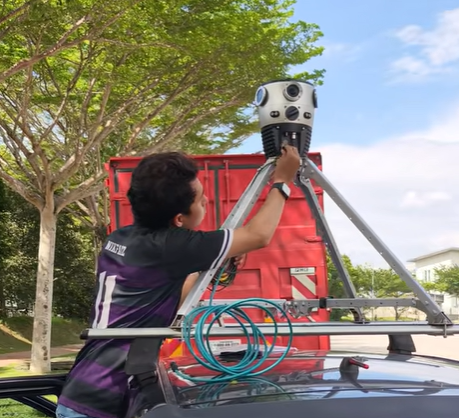
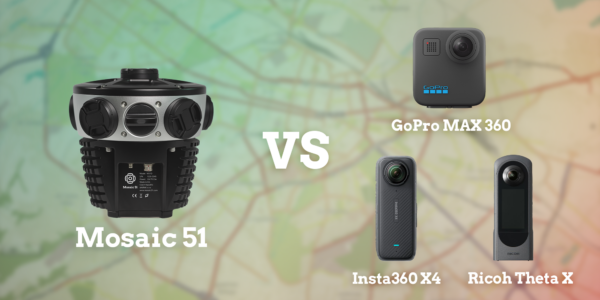
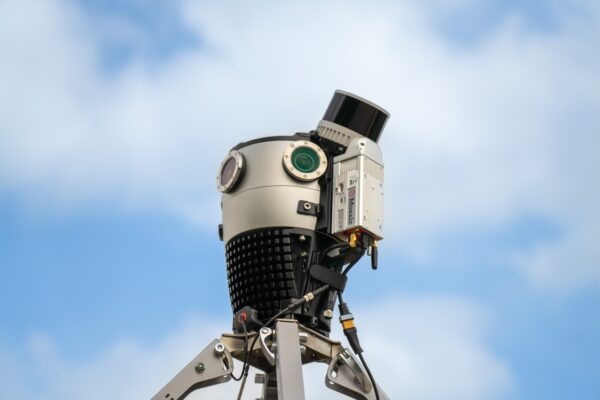
A 360° camera equipped with LiDAR sensors is one of the fastest and most accurate ways to gather surveying data, perform photogrammetry, and get boots-on-the-ground information before starting construction.
Utility pole inspections
Before any aerial fiber is strung, every existing utility pole along a proposed route must be assessed for structural capacity, attachment conflicts, and required repairs. LiDAR-equipped 360° cameras can capture full point-cloud data around each pole. This includes height, class, lean angle, guy and anchor configuration, ground-line circumference, and existing attachments, all with centimeter-level spatial accuracy. This data directly feeds engineering documentation required to obtain pole attachment agreements from utilities.
Read more about how the Mosaic X streamlined Vulcan Line Tools’ FTTX projects.
Route documentation and right-of-way verification
State broadband offices and NTIA auditors require detailed documentation of funded infrastructure for accountability purposes. 360° mobile mapping along proposed aerial and underground routes creates an immutable, georeferenced visual record. The record then supports permitting, environmental review, and post-construction verification, with 360° imagery that even non-experts can interpret.
Learn how the Mosaic 51 is improving the efficiency of infrastructure projects in Colombia.
Underground pre-construction scanning
When combined with ground-penetrating radar (GPR), LiDAR-equipped survey systems enable contractors to characterize subsurface conditions before breaking ground. Preplanning like this reduces the risk of utility strikes during directional boring or conventional trenching operations. Given BEAD’s strict non-duplication requirements, which demand precise mapping of both proposed and existing infrastructure, this is particularly valuable.
As-built documentation
NTIA and state broadband offices require subgrantees to verify that funded construction was completed as proposed. 360° imagery and LiDAR-derived point clouds captured at project completion create audit-ready as-built documentation. It both satisfies federal reporting requirements and protects subgrantees in the event of a compliance review.
360° imagery is especially helpful for laypersons who may not have experience reading point cloud data. It builds trust between service providers, local governments, and taxpayers with clear images that anyone can interpret.
For feature extraction, software programs like Pathfinder and Ranger from New Compass are options that are both compatible with Mosaic imagery and also help you maintain compliance.
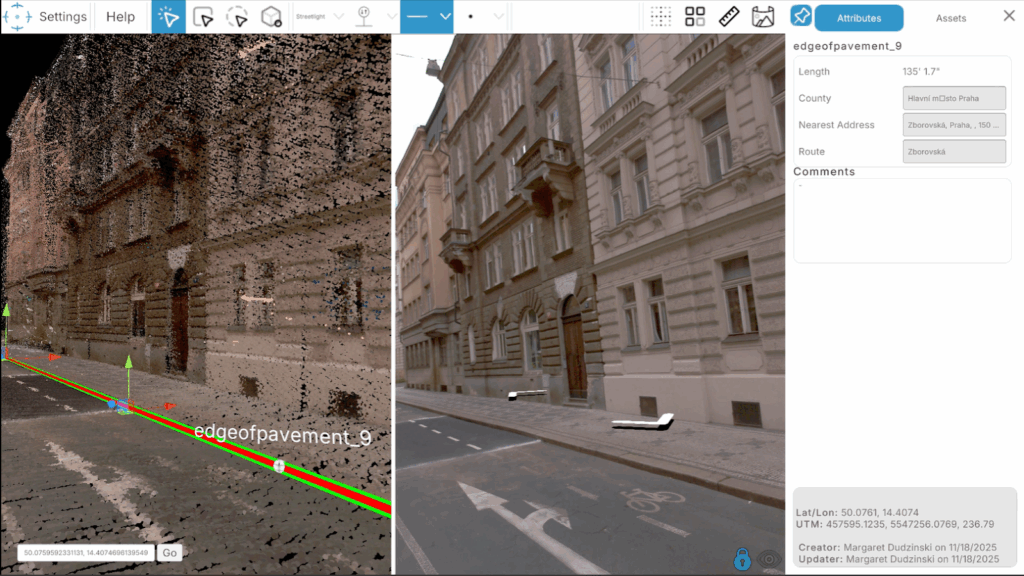
Cost savings across large-scale projects
For projects spanning hundreds or thousands of miles of rural terrain, manual field surveys are slow and expensive. Vehicle-mounted 360° camera and LiDAR systems can survey substantially more infrastructure per field crew per day than traditional methods. The cost savings by compressing pre-construction timelines and lowering the cost per surveyed mile allow BEAD dollars to stretch further into actual deployment.
Frequently asked questions about the BEAD Program
How much BEAD Program funding is available?
The grants distributed under the Broadband Equity, Access, and Deployment (BEAD) program total $42.45 billion USD across the 50 states, Washington D.C., and the 5 territories of the US.
What inspired the BEAD program?
The BEAD program was inspired by the crucial role broadband connectivity plays in the modern infrastructure network. High-speed internet access in rural areas leads to job creation and improves access to online services, such as remote work and online school.
Where do these broadband funds originate?
The funds are federal appropriations, or taxpayer dollars authorized by Congress and managed through the Department of Commerce. NTIA is the program administrator and is responsible for setting program rules, reviewing state proposals, approving subgrantee selections, and overseeing fund disbursement.
Can I still apply for BEAD funding?
This depends on the state. Most states have already completed their subgrantee selection rounds, and grant agreements are now being executed. For states that have not yet finalized award agreements, there may be limited opportunities through supplemental or challenge rounds. The best approach is to check your state broadband office’s official website directly, as timelines and procedures differ materially by jurisdiction.
Is BEAD funding available in all 50 states?
Yes! All 50 states, the District of Columbia, and five US territories (American Samoa, Guam, the Commonwealth of Northern Mariana Islands, Puerto Rico, and the US Virgin Islands) are eligible entities under the BEAD program.
The future of broadband connectivity in the US
With approximately $21 billion in projected savings from the Benefit of the Bargain restructuring, NTIA faces both an opportunity and an obligation. The agency held a public virtual listening session in early 2026 and has received, by its own description, “an extraordinary level of interest and feedback” on how to best use the remaining funds.
Several potential directions are under discussion. These could include:
- supplemental rounds targeting locations that remain unserved after the primary deployment phase,
- middle-mile investments to reduce backhaul costs in rural areas, and
- digital adoption and workforce development programs that improve meaningful use of newly built infrastructure.
With construction set to begin across dozens of states in 2026, the US is on the verge of executing the most geographically comprehensive broadband buildout in the nation’s history. For the ISPs, engineers, surveyors, and technology vendors involved, the work is just beginning.
To learn more about how a 360° mobile mapping system fits into your company’s broadband expansion plans, reach out to our team today.